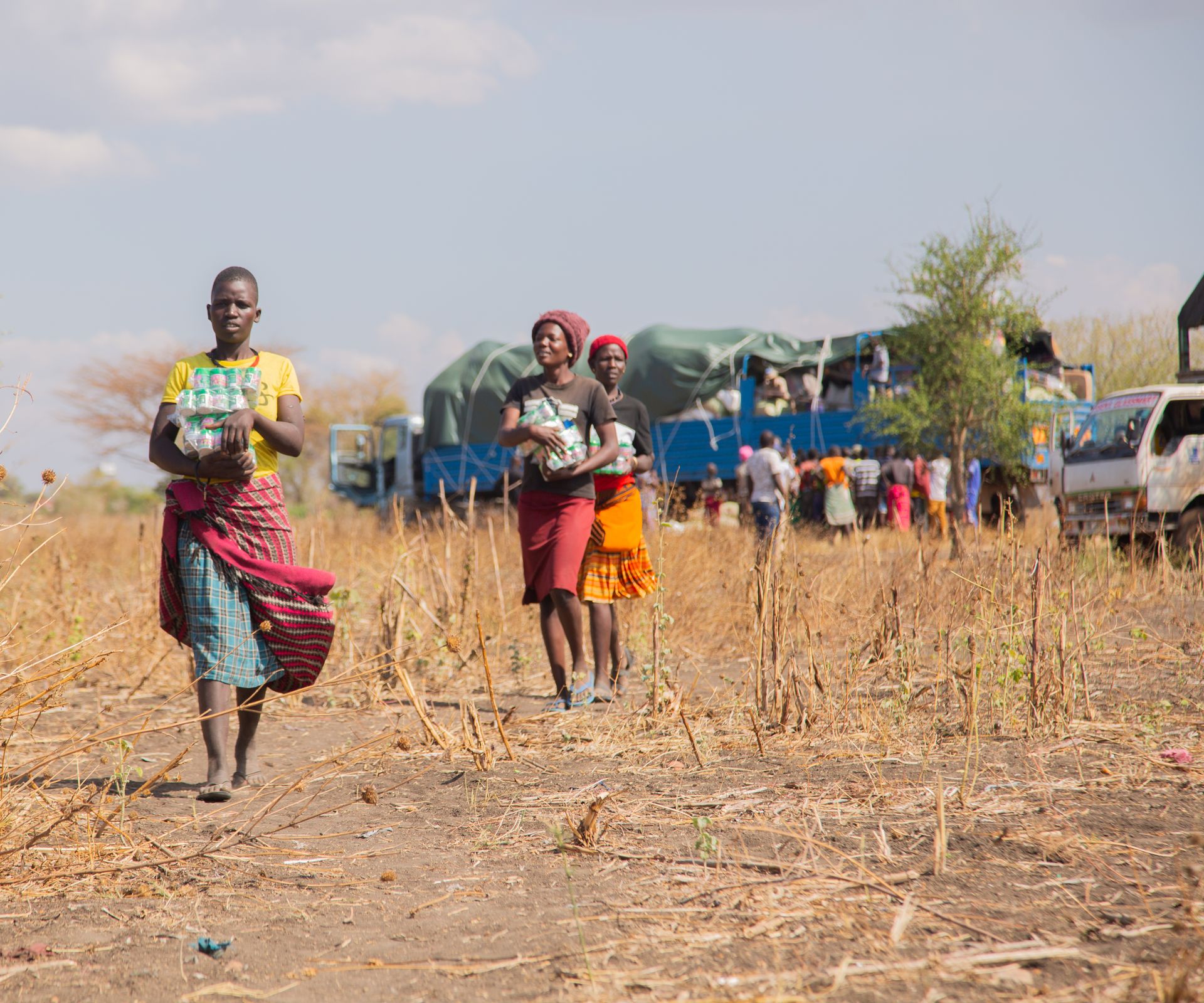
Humanitarian logistics in Uganda ensures that life-saving relief supplies – food, water, medical kits, shelter, and WASH items – reach the most vulnerable populations quickly and reliably. Jumla Uganda provides comprehensive humanitarian logistics services including warehousing, procurement, transport, last-mile delivery, and supply chain coordination for NGOs, UN agencies, and government disaster response teams. Operating from Kampala with national coverage, we align with Uganda's Office of the Prime Minister disaster frameworks and international humanitarian standards.
📋 What is Humanitarian Logistics?
Humanitarian logistics is the process of planning, implementing, and controlling the efficient flow of relief goods, information, and resources from point of origin to disaster-affected communities. In Uganda, this includes prepositioning refugee supplies near settlements (e.g., Bidibidi, Kyaka, Nakivale), coordinating with the Uganda Red Cross Society, and working under the UN cluster system.
Example: During flood emergencies in Eastern Uganda, humanitarian logistics teams deploy emergency shelters, water purification tablets, and hygiene kits within 48 hours using pre-positioned warehouses and local transport networks.
🚚 Procurement
🏠 Warehousing
🚛 Transport
📍 Last-Mile
⚙️ Key Components of Humanitarian Logistics in Uganda
Our humanitarian logistics framework covers the 7 components of logistics:
1. Procurement & Sourcing – Locally and internationally sourced relief items compliant with
UNBS standards, including
food aid supplies.
2. Warehousing & Inventory – Secure, climate-controlled
humanitarian warehouse facilities in Kampala, Gulu, and Mbarara.
3. Transport & Freight – Fleet of trucks, vans, and 4x4 vehicles for both paved and off-road routes.
4. Distribution & Last-Mile – Reaching refugee camps, IDP settlements, and remote villages.
5. Reverse Logistics – Returns, recycling, and waste management for non-food items.
6. Information & Coordination – Real-time tracking, reporting, and cluster coordination with OPM and WFP, including
NGO procurement support.
7. Quality & Compliance – Adherence to WHO, UNHCR, and
UNBS guidelines. We are a registered
UN supplier in Uganda.
🔄 Humanitarian Logistics vs Commercial Logistics
| Aspect | Humanitarian Logistics | Commercial Logistics |
|---|
| Primary Goal | Save lives, reduce suffering | Maximize profit, reduce cost |
| Demand | Unpredictable, sudden | Predictable, stable |
| Supply Chain | Often fragmented, ad-hoc | Integrated, streamlined |
| Stakeholders | NGOs, UN, government, donors | Customers, shareholders |
| Performance Metrics | Speed, reach, accountability | Efficiency, cost, ROI |
| Risk Environment | Conflict, disease, infrastructure collapse | Market volatility, competition |
📌 The 7 C's of Logistics Applied to Humanitarian Context
The 7 C's framework – Cost, Capacity, Communication, Coordination, Consistency, Control, Customer Satisfaction – is adapted for Uganda with an added focus on Collaboration (with OPM, WFP, UNHCR, Uganda Red Cross) and Compassion (ensuring dignity for beneficiaries).
🕊️ Core Humanitarian Principles in Logistics Operations
Every logistics operation we conduct in Uganda upholds:
- Humanity – Prioritize human suffering.
- Impartiality – Aid based on need, not nationality, religion, or politics.
- Neutrality – Not taking sides in hostilities.
- Independence – Autonomous from political, economic, or military objectives.
📚 Humanitarian Logistics Courses & Skills in Uganda
For professionals seeking to build expertise, Uganda offers humanitarian logistics training through institutions like TrainingCred and NIU. Key skills include supply chain management, emergency response planning, inventory control, negotiation, and cross-cultural communication. Capacity building is also delivered by WFP's global logistics cluster and Uganda's Office of the Prime Minister.
🏆 Who is the Greatest Humanitarian?
While many individuals have made immense contributions, in the logistics space, figures like Dr. Paul Farmer (through Partners In Health) and UN humanitarian coordinators have set benchmarks. In Uganda, the collective efforts of Uganda Red Cross volunteers, OPM disaster teams, and WFP logistics officers exemplify humanitarian greatness through coordinated action.
📈 How to Improve Humanitarian Logistics in Uganda?
- Pre-positioning supplies near high-risk zones.
- Digitalizing inventory and tracking (RFID, GPS).
- Strengthening local supplier networks.
- Enhancing inter-agency coordination.
- Investing in road infrastructure and alternative transport (lake/river).
- Training local logistics personnel.
🤝 Types of Humanitarian Services We Support
🧕 Refugee camp support and settlement logistics
🦠 Disease outbreak response (e.g., Ebola, cholera)
⚠️ Disaster preparedness and risk reduction
🚀
Ready to Deliver with Confidence
From refugee supplies to advanced medical kits, Uganda's relief network is your partner. We stand ready to support your mission with reliable, certified supplies and seamless logistics.
💬 Chat on WhatsApp for a tailored quote.